
Moonlight Theater Company
Athens, GA USA

WARNING: OCCASIONAL BUTT CHEEK | AGE: 18+
Sold-out Edinburgh Fringe 2025
AWARDS: Critic’ Pick - ATL Arts | Fringe AF - Denver Fringe | Critics Choice - KC Fringe |Audience Choice - Richmond Fringe
Reviews:
★★★★★ “A physical comedy masterclass” - The Wee Review
★★★★★ “Simply one of the funniest shows I’ve ever seen” - The Real Chrisparkle
★★★★ - “A sweaty, seductive and very silly joyride” - Broadway Baby
★★★★★ - Denver Fringe
★★★★★ - KC Fringe (previous show)
 Nudity Swearing Strobe Lights Audience Interaction Fog or Special Effects
The Buzz Intro Interview
Chase Brantley | Artistic Director of Moonlight Theater Co

1. Why should people see your show?
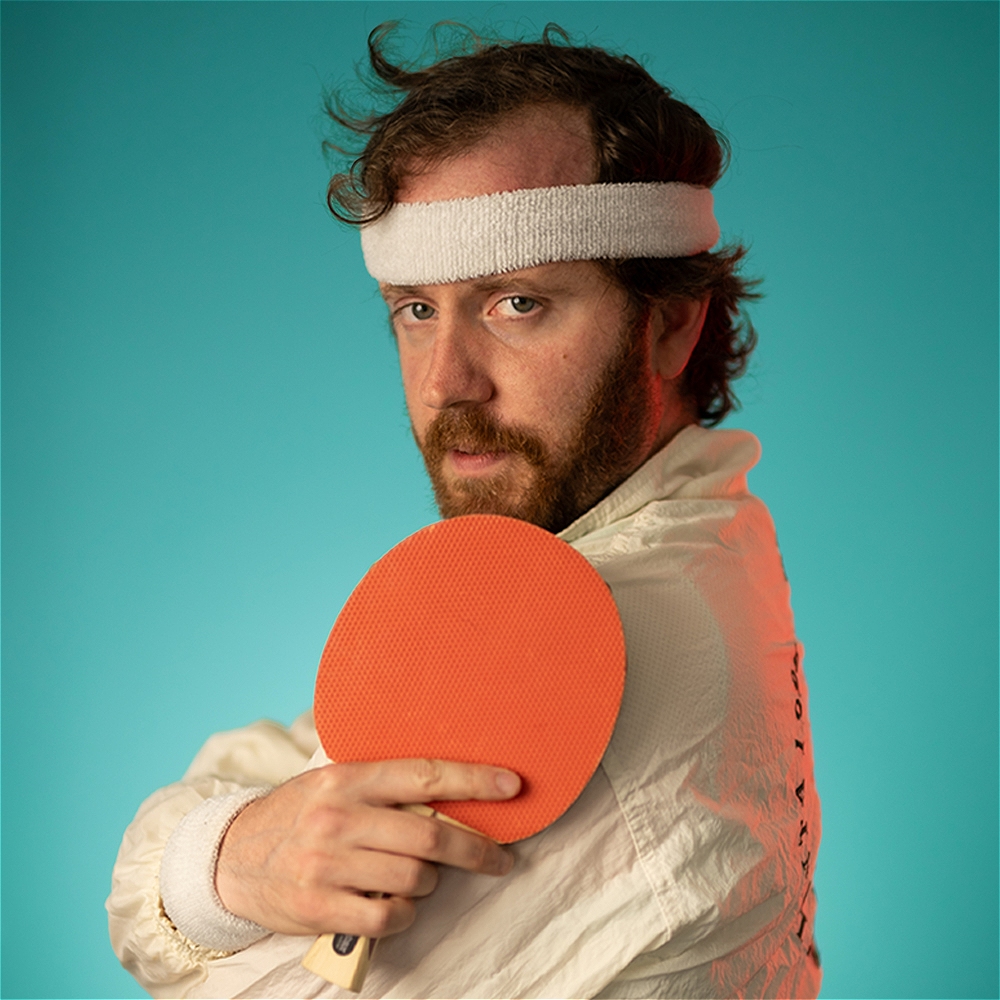
People should see this show if they want to to feel amazing, experience theater like they’ve never seen it, and laugh a lot. In DON TOBERMAN: PING-PONG CHAMP, I play a professional ping-pong play who takes on the entire audience for a high-stakes, career-defining match. The only catch is that the ball is invisible. Out of this absurd premise emerges as wild, sensitive, and total unhinged comic world.
This show’s risk and playfulness forces you into the presence. But don’t be turned off by the audience interaction. It’s also a sensitive and joyful space, where there is plenty of humor is simply saying no and that you don’t want to play. By the end, you’ll feel light, more open to world, and a little more live — all worthy reasons to spend money to go to the theater.
2. What about festivals intrigues you? And why the Atlanta Fringe?
Fringe festivals are the heart and soul of inventive theater. They’re spaces with no barrier to entry. You don’t have to be “good” to have a show. There’s no producer gatekeeping you out, especially at the Atlanta Fringe, which is truly a lottery. That gives artists a platform to test ideas, to create, and to fail. Because without the chance to fail, nothing beautiful or transformative can emerge.
Right now, if you look at streaming or Broadway, investors are so afraid of risk that much of what gets produced feels stale, predictable, and overly cautious. The Fringe, by contrast, is a place for work that’s original and emerging. The Atlanta Fringe is one of the best in the country. Plus, it’s right in my backyard, which is convenient.
In today’s capitalist society, low-cost spaces that prioritize risk and failure are rare, and that’s why we need to support and protect Fringe festivals. As an audience member, it’s exhilarating to see something you literally can’t see anywhere else in the world. If we want to create genre-defining, generationally remarkable art, we have to fund work that might fail—and that’s exactly what the Fringe celebrates.
3. What inspired you to create this?
The show began as a small exercise while I was touring another clown piece, Fruit Salad, with Nicholas Hemerling. I realized I needed to practice playing anger on stage, so I created a ridiculous, braggadocious ping-pong character. The idea was simple: pantomime an imaginary match, win points, then lose them for no reason—so I could explore the frustration of thinking I was a great player but failing anyway. I loved the character, and after testing short versions in cabarets and in Athens, Georgia, I realized it could grow into a full show. Its first full run at the Denver Fringe Festival sold out and even won an award, and the piece has since toured internationally, including Australia, the Edinburgh Fringe, Norway, France, and Switzerland.
On the surface, it’s a parody of sports—world-class ping pong with invisible balls, tables, and sometimes rules—but beneath that absurdity, it explores human themes: ambition, loneliness, camaraderie, the need for approval, obsession, and even queer identity. Out of almost nothing—just a performer, an audience, and an imaginary game—the show becomes surprisingly poetic, revealing the humor, beauty, and pathos of striving and failing to achieve your dreams.